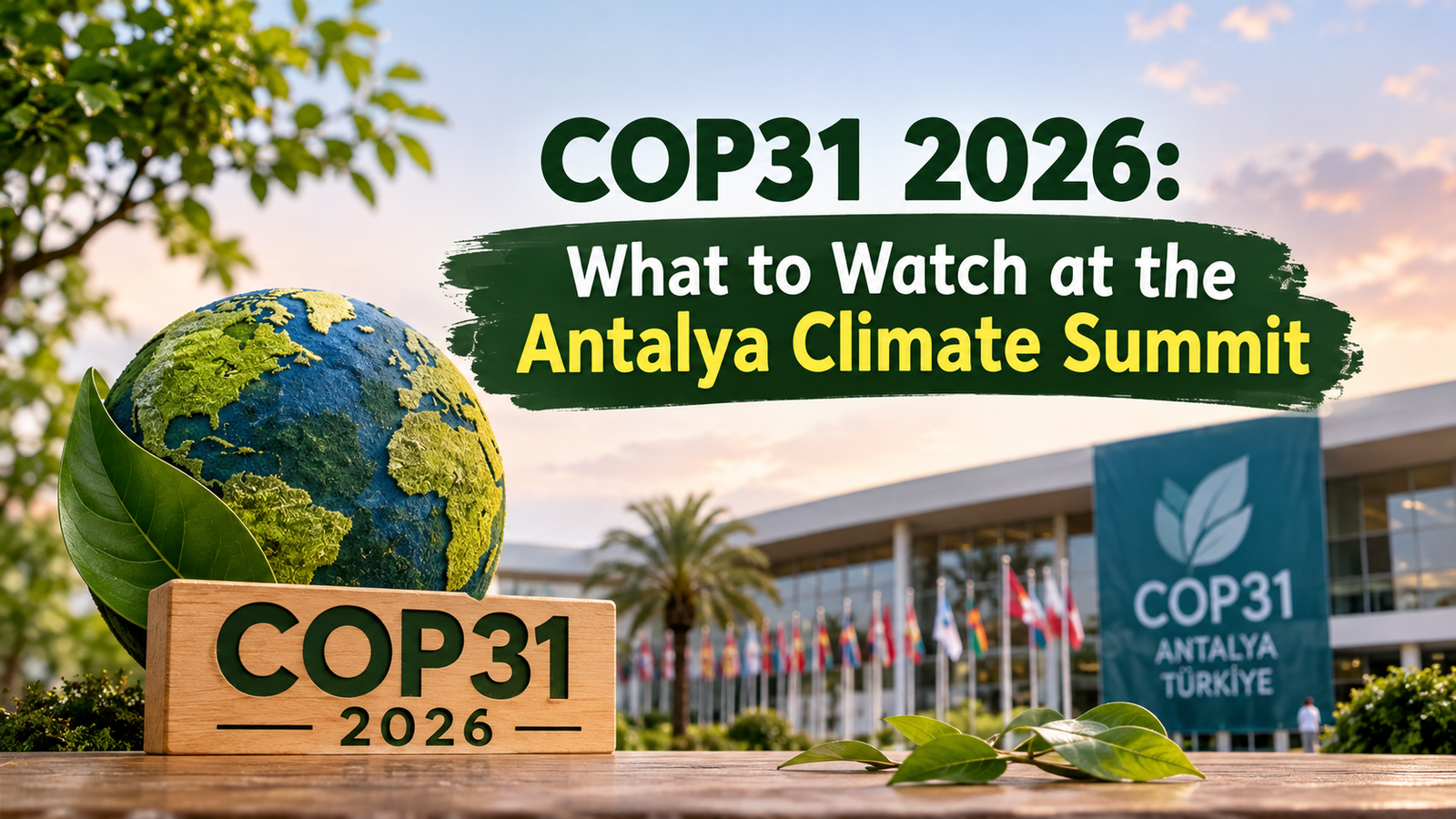
COP31 2026, 7 Nov is still ahead: the United Nations climate conference is scheduled for 9–20 November in Antalya, Türkiye. The leaders’ summit is listed for 11–12 November. This preview explains what the official programmed says to watch, how to read the newly posted pre-session documents, and why the negotiations matter beyond the summit headlines.
One important distinction: the conference has not opened yet, so there are no COP31 2026 decisions or results to report. The schedule and documents described below are official information available before the meeting, and the UNFCCC says the calendar is updated as sessions are confirmed.
Table of Contents
What Is COP31 2026?
COP31 2026 is the 31st Conference of the Parties to the United Nations Framework Convention on Climate Change. It is a yearly forum where governments negotiate and make decisions under the UN climate framework and the Paris Agreement. The UNFCCC describes this year’s focus as putting climate solutions into practice and advancing a global energy transition, with attention to jobs, food security, health and affordable clean energy.
The conference will be held at the Antalya Expo Center. Türkiye is hosting it; the UNFCCC page names Murat Kurum as the nominated COP31 2026 President and Australia’s Chris Bowen as President of Negotiations. For a wider look at a related environmental issue, see our earlier guide, Can the World Meet Biodiversity Goals by 2030? Climate and biodiversity policy connect, but COP31 2026 negotiations are part of the UN climate process.

Dates and Key Meetings
- Main conference: 9–20 November 2026, Antalya Expo Center, Türkiye.
- Antalya Leaders’ Summit: 11–12 November 2026.
- The official COP31 schedule is in Europe/Istanbul time (UTC+3) and is updated as meeting times are confirmed.
The leaders’ summit programme lists discussions on clean-energy transition and electrification, green industry and jobs, implementation of the Paris Agreement and access to finance, and urban resilience and adaptation. The schedule notes that timings may change, so readers should check the official calendar for the latest version.
Five Issues to Watch at COP31 2026
1. Moving from climate plans to implementation
The presidency’s stated emphasis on implementation makes the gap between plans and delivered action a central question. Watch for how countries describe turning climate targets into practical policies, projects and timelines. An announcement is not the same thing as an adopted decision or a completed project; the final texts and follow-up mechanisms will show what governments actually agreed.
2. Climate Finance and Access
Finance is prominent in the official pre-session documents. Documents dated 3 November include the Standing Committee on Finance’s assessment of climate-finance flows and a report on progress toward the jointly mobilized 100-billion-dollar-a-year goal. These are papers submitted before the conference for consideration, not new COP31 2026 commitments or meeting outcomes. Watch for discussion of who can access support, how it is delivered, and how countries track results.
3. Adaptation and Loss and Damage
The provisional agenda includes adaptation and the Warsaw International Mechanism on Loss and Damage. For communities facing floods, heat, drought or sea-level rise, the practical questions include whether support reaches people who need it, whether plans are locally useful, and how governments measure resilience. COP31 2026 documents include draft guidance relating to the Fund for responding to Loss and Damage; their presence on the agenda does not by itself mean new funding has been approved.
4. A Fair and Affordable Energy Transition
The official summit programme includes clean-energy transition and electrification as well as green-industry discussions. Follow how leaders talk about reliability, affordability, jobs, energy access and the pace of replacing high-emission systems. Countries face different starting points, so the important details are the transition plans, financing and safeguards—not only broad slogans.

5. Resilient Cities, Health and Food Security
The leaders’ programme also lists urban resilience and climate action. Cities are where heat, water stress, transport, housing and health services meet. Food security is part of the presidency’s stated rationale for climate solutions. Watch whether proposed actions connect national promises with plans people can see in local infrastructure and essential services.
An International Example: Pacific Voices Before Antalya
The UNFCCC conference page describes a Pre-COP meeting and leaders’ event held 5–8 October 2026 in the Pacific, delivered in partnership by Fiji, Tuvalu and Australia. That was a preparatory event before the Antalya conference, not part of COP31’s 9–20 November negotiating dates. It illustrates how countries and regions can bring their priorities into the process before the main negotiations begin.
The host and negotiation roles also cross borders: Türkiye hosts the meeting while an Australian minister is listed as President of Negotiations. These arrangements show the international nature of the process, but the decisions themselves are made by participating governments through the UNFCCC framework.
Why COP31 Matters to Everyday Readers
Climate talks can affect long-term choices about energy, transport, buildings, public health, food systems and funding for adaptation. A summit does not control daily weather or immediately change household bills. Its value depends on whether agreements lead to policies, funding and work that governments carry out after delegates leave.
Readers can follow the negotiations without assuming every headline is a final agreement. Look for the difference between a proposal, a presidency announcement, a negotiated text and an adopted decision. The official COP31 2026 calendar and session documents provide the primary record; later implementation reports can show what happened after the conference.
Practical Suggestions for Following COP31 2026
- Save the official UNFCCC schedule and check it again before sharing meeting times; the calendar changes as sessions are confirmed.
- When you see a claim about a new climate pledge, check whether it is a proposal, a leaders’ statement or an adopted decision.
- For finance headlines, read the source document’s date and name. A pre-session report published on 3 November is not an outcome from negotiations that begin on 9 November.
- Compare a country’s announcement with its published climate plan and later progress reports.
- Follow adaptation, loss and damage, energy affordability and public-health topics alongside emissions targets.
- Use the UNFCCC source pages linked below for dates and official documents, then compare them with reporting from reputable international outlets.
Frequently Asked Questions
When and Where Is COP31 2026?
The UNFCCC lists the conference for 9–20 November 2026 at the Antalya Expo Center in Antalya, Türkiye.
When Is the Leaders’ Summit?
The Antalya Leaders’ Summit is scheduled for 11–12 November 2026. Its published schedule says timings may change, so check the official page for updates.
What Does COP31 2026 Stand For?
It means the 31st Conference of the Parties to the UN Framework Convention on Climate Change. “COP” refers to the participating governments meeting under the convention.
What Is the Main Focus This Year?
The UNFCCC describes COP31 as focused on implementing climate solutions and advancing a global energy transition. The published programme also features finance, adaptation, loss and damage, clean energy and urban resilience.
Are the Finance Reports COP31 2026 Decisions?
No. The finance papers dated 3 November are pre-session documents listed for consideration. They are not final decisions or new commitments announced by COP31 2026.
Can the Public Attend?
The UNFCCC says official Blue Zone negotiations and events require registration for eligible participants. Türkiye’s Green Zone is described as open to the public. Check the official participation information for current access details.
Conclusion
COP31 begins in Antalya on 9 November, with climate finance, implementation, adaptation and the energy transition among the issues to follow. As of 7 November, the official schedule and pre-session papers describe what is coming; they do not yet show what governments will decide. Track the final texts and the work that follows the summit to see whether commitments turn into practical action.
Sources and Further Reading
- UNFCCC: About COP31 — dates, location, stated focus and hosting arrangements.
- UNFCCC: Antalya Leaders’ Summit — 11–12 November programme and roundtables.
- UNFCCC: COP31 session and pre-session documents — includes finance papers dated 3 November 2026.
- UNFCCC: COP31 schedule — current meeting calendar; updated as sessions are confirmed.
- UNFCCC: COP31 conference page — overview and linked participation information.
Leave a Reply