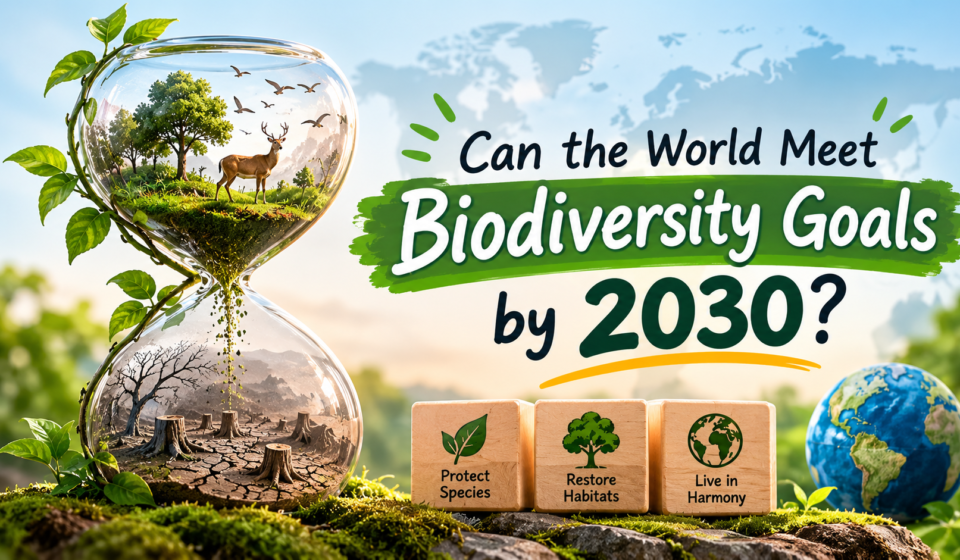

Can countries meet the global biodiversity goals by 2030? They already have a shared plan, but its first worldwide progress review found that action is not moving fast enough. At the UN Biodiversity Conference in Yerevan, Armenia, governments adopted the Yerevan Pathway to speed up implementation of the existing Kunming–Montreal Global Biodiversity Framework.
This explainer covers what the COP17 outcome means, what it does not mean, and what needs to happen next. The Yerevan Pathway did not replace the 2022 framework or create a new biodiversity treaty.
What are the global biodiversity goals for 2030?
The Kunming–Montreal Global Biodiversity Framework (GBF) was adopted in 2022. It sets out four long-term goals for 2050 and 23 targets to be achieved by 2030. These targets cover the protection and restoration of ecosystems, sustainable use of natural resources, reducing pollution and harmful incentives, and directing more finance toward nature. The official Convention on Biological Diversity framework page explains the targets.
One widely discussed target calls for conserving at least 30% of the world’s land, inland waters, coastal areas and oceans by 2030. The framework is a shared international plan; each country still needs to translate it into national policies, budgets and measurable work.
What did COP17 agree in Yerevan?
The 2026 UN Biodiversity Conference held its first global review of collective progress under the GBF. The Convention on Biological Diversity (CBD) Secretariat says the review found that the world is off track to meet the 23 targets by 2030. Governments responded with the Yerevan Pathway: a set of priorities for accelerating implementation, including better national planning, more support for developing countries, review of nature-harming incentives, and stronger monitoring and reporting.

The CBD Secretariat’s closing press release, dated 31 October 2026, says the conference concluded that day and adopted nearly 50 decisions. UNEP’s event listing had scheduled the conference for 19–30 October 2026. The scheduled conference dates and the date of the closing announcement are different, so this article notes both.
Is the Yerevan Pathway a new treaty?
No. COP17’s Yerevan Pathway is an implementation route under the existing Kunming–Montreal framework, not a new treaty. It responds to the first progress review and sets out where countries need to accelerate work before the 2030 deadline.
The CBD release also says parties agreed the operating rules for a permanent subsidiary body on Article 8(j), named the Sevan Guidelines, to strengthen the role of Indigenous Peoples and local communities in biodiversity decisions. That matters because conservation plans are more likely to work when affected communities help shape them and their knowledge and rights are respected.
Examples of how global commitments could become practical action
Mountain and freshwater protection
On 28 October 2026, Armenia’s COP17 presidency and UNEP launched the Yerevan Platform on Mountains and Related Freshwater Ecosystems. It is intended to connect mountain countries with downstream countries that depend on their water, and to coordinate conservation, restoration, funding and technical support. UNEP says mountain and related freshwater ecosystems provide 55–60% of global annual freshwater flows. This is one concrete example of international cooperation linked to biodiversity goals. Read the UNEP announcement.

Finance and investment
The CBD Secretariat’s closing release lists new funding announcements and initiatives, including support through the GEF-9 replenishment, the Species Recovery Alliance and the Value Nature Fund. It also names an Asian Development Bank biodiversity bond and investment incubator. These are announcements and commitments; readers should look for later reports showing when funding is approved, delivered and used.
Tracking whether plans are working
Countries can be checked against their national biodiversity strategies, targets, budgets and progress reports. A useful measure is whether protected areas and restoration projects improve conditions for species and ecosystems—not only whether governments publish new plans.
Why reaching the 2030 targets will be difficult
- Time: only four years remain from the 2026 review to the 2030 target year.
- Implementation gaps: national plans need responsible agencies, timelines, local participation and budgets.
- Finance: announced funding must reach conservation work and communities, and must be tracked transparently.
- Conflicting incentives: subsidies and investment that damage nature can undermine conservation goals.
- Measurement: governments need comparable information so progress and setbacks can be seen.
The review being off track does not mean every target is impossible. It does mean that small, slow or unmeasured steps will not be enough. Governments need to act faster, report honestly and adjust policies when the evidence shows they are not working.
Practical suggestions for readers
- Check whether your country has published an updated national biodiversity strategy and how it is funded.
- Follow official CBD updates and separate a funding announcement from money actually delivered.
- Support local habitat restoration, native planting and responsible land or water stewardship led by credible local groups.
- Ask businesses and public agencies how their projects affect habitats, water and local communities.
- When sharing COP17 news, include the source and date, and distinguish a negotiated decision from a proposal or announcement.
For more explainers, visit SadatHub’s Current Affairs archive or browse the blog archive.
Frequently asked questions
What is the Kunming–Montreal Global Biodiversity Framework?
It is the global biodiversity plan adopted in 2022 under the Convention on Biological Diversity. It contains four goals for 2050 and 23 targets for 2030.
What is the Yerevan Pathway?
It is a COP17 outcome that sets priorities to accelerate implementation of the existing framework after the first global review found the world off track.
Did COP17 create a new biodiversity treaty?
No. The Yerevan Pathway guides faster implementation; it does not replace the Kunming–Montreal framework or create a new treaty.
Can the world still meet the 2030 nature targets?
It is not guaranteed. The first global review says the world is off track, so meeting the targets depends on faster implementation, effective funding, national action and transparent progress reporting.
Have the new biodiversity funds already been spent?
Not necessarily. The CBD release describes funding announcements and initiatives. Follow-up reporting is needed to see what was formally approved, disbursed and used.
Conclusion
The world has a clear biodiversity framework for 2030, but the first global review shows that commitments have not yet turned into enough action. COP17’s Yerevan Pathway gives countries a route to accelerate that work, while the Sevan Guidelines and new international initiatives highlight the importance of communities, finance and practical implementation. Whether countries can meet the biodiversity goals by 2030 will depend on what governments and institutions deliver—and report—over the next four years.
International sources and date check
Sources checked on 31 October 2026. UNEP’s event page lists the scheduled COP17 dates as 19–30 October. The CBD Secretariat’s closing release is dated 31 October and says the conference concluded that day. The Yerevan Platform announcement was published 28 October. These publication/announcement dates are separate from the scheduled conference dates.
- Convention on Biological Diversity: COP17 charts the Yerevan Pathway (31 October 2026)
- CBD: State of Biodiversity Action, the 2026 global progress review
- CBD: Kunming–Montreal Global Biodiversity Framework and its targets
- UNEP: 2026 UN Biodiversity Conference dates and overview
- UNEP: Yerevan Platform on mountains and freshwater ecosystems (28 October 2026)