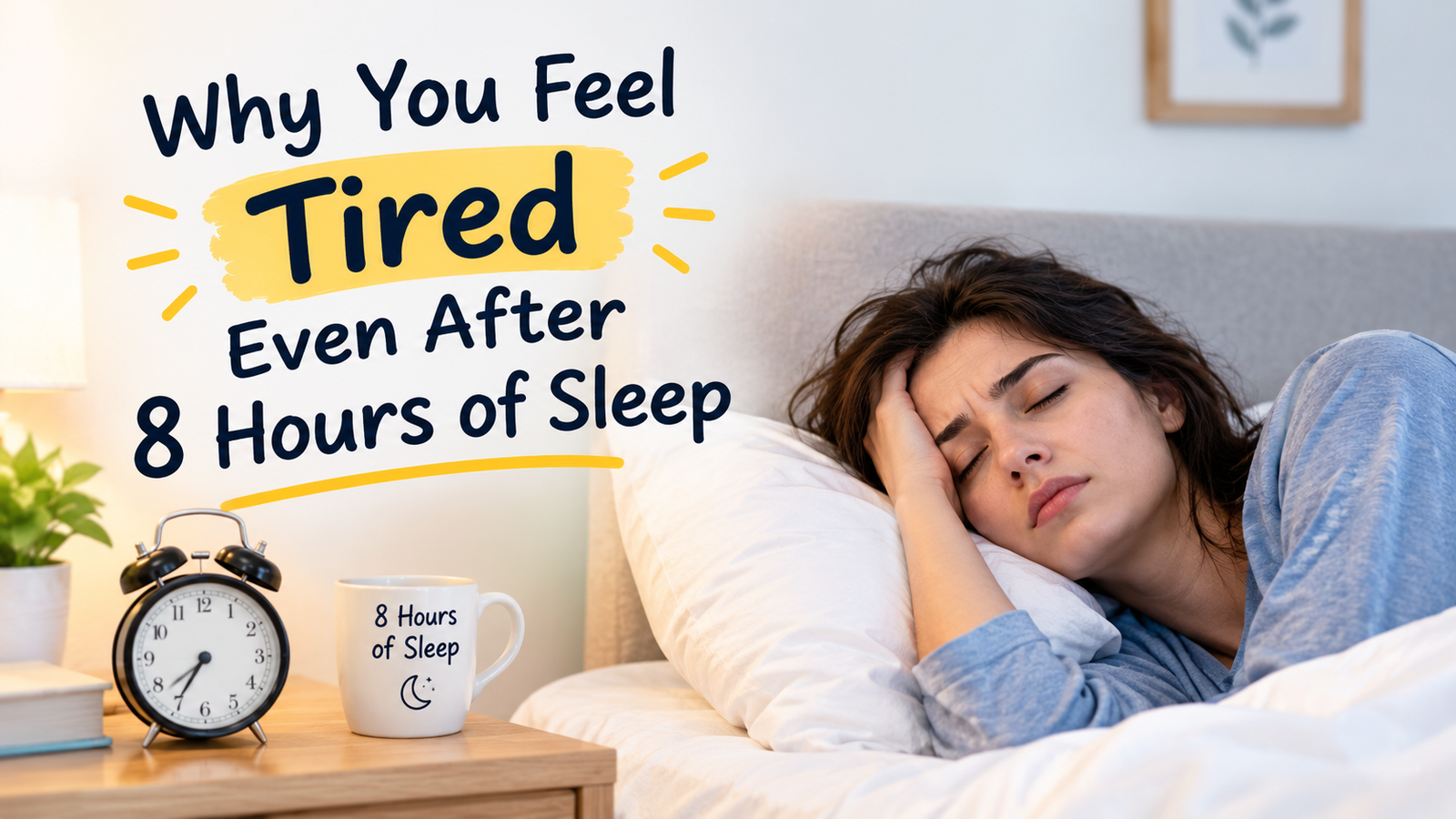

Have you ever slept for eight hours but still woken up feeling tired? You are not alone. Getting enough hours of sleep does not always mean you are getting good-quality, refreshing sleep.For most adults, getting at least seven hours of sleep is recommended. However, sleep quality, regularity, your daily habits, and possible sleep problems can also affect how rested you feel.
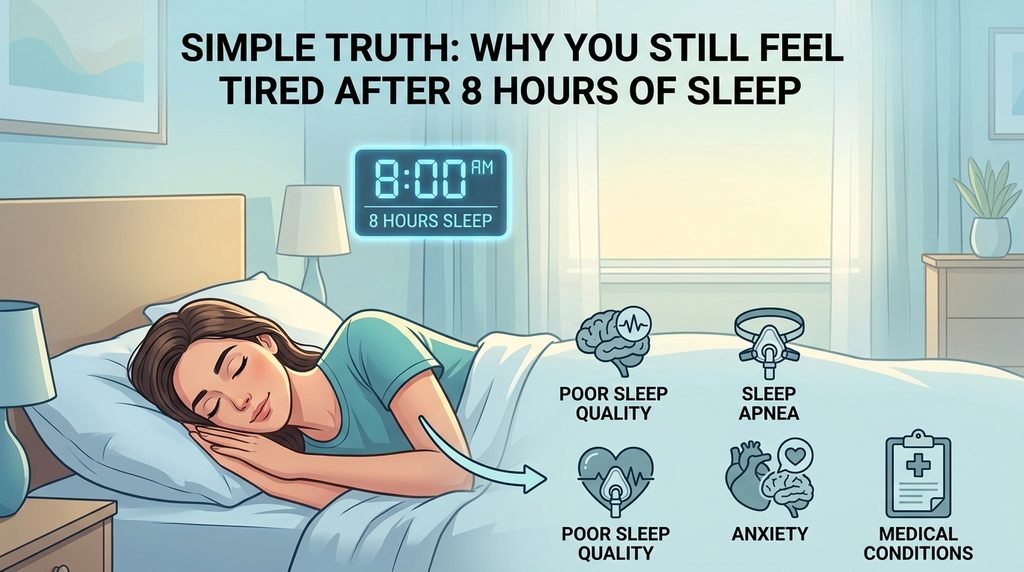
So, why can you still feel tired after a full night’s sleep? Let’s look at some possible reasons.
1. Your Sleep Quality May Be Poor
Eight hours in bed does not necessarily mean eight hours of quality sleep.
If you wake up several times during the night, have trouble staying asleep, or do not feel refreshed in the morning, your sleep may not be as restorative as it should be. Poor sleep quality can leave you feeling tired even when you spend enough time in bed.
Try to keep your bedroom quiet, comfortable, and relaxing. A consistent bedtime and wake-up time can also help support better sleep habits.
2. Your Sleep Schedule May Be Irregular
Going to bed and waking up at completely different times each day can make it harder to maintain a consistent sleep routine.
For example, sleeping early on some days and staying up very late on others may affect your body’s regular sleep-wake rhythm.
Try going to bed and waking up around the same time each day, including on weekends.
3. Your Phone May Be Keeping Your Brain Active
Using your phone, watching videos, or scrolling through social media right before bed can make it harder to relax.
The CDC recommends turning off electronic devices at least 30 minutes before bedtime as part of healthy sleep habits.
Instead, try putting your phone away before sleeping and use that time to relax, read, or prepare for the next day.
4. Stress Can Affect Your Sleep
Your body may be resting while your mind is still busy.
Work pressure, financial concerns, personal problems, or simply thinking about tomorrow can make it difficult to get truly refreshing sleep.
A simple bedtime routine may help you relax. Writing down tomorrow’s tasks, doing some light reading, or spending a few quiet minutes away from screens can help create a calmer transition to sleep.
5. Your Daily Habits Matter
Your daytime routine can also affect how you sleep at night.
Regular physical activity, a healthy diet, exposure to natural light during the day, and avoiding caffeine later in the day can support better sleep habits.
Small changes to your daily routine may make a noticeable difference in how you feel in the morning.
6. You May Have a Sleep Problem
Sometimes, feeling tired after enough sleep can be related to a sleep disorder.
For example, symptoms such as loud snoring, gasping during sleep, repeatedly waking up, or feeling excessively sleepy during the day can be signs that your sleep is being disrupted.
If these problems happen regularly, it is worth discussing them with a healthcare professional.
7. More Sleep Isn’t Always the Answer
When you wake up tired, your first thought may be to simply sleep longer. But if you are already getting enough sleep and still regularly feel exhausted, the issue may be the quality or timing of your sleep rather than the number of hours.
Adults generally need at least seven hours of sleep, but individual needs can vary.
Simple Ways to Wake Up Feeling More Refreshed
You can start with a few simple habits:
- Keep a consistent sleep schedule.
- Make your bedroom comfortable and quiet.
- Avoid screens before bedtime.
- Limit caffeine later in the day.
- Stay physically active during the day.
- Get some natural light during the daytime.
- Give yourself enough time to sleep.
- Pay attention to repeated sleep problems.
Final Thoughts
Feeling tired after eight hours of sleep does not always mean you need more sleep. Sleep quality, your routine, stress, and possible sleep problems can all affect how refreshed you feel.
Start by improving your sleep habits and keeping a consistent routine. If you regularly wake up tired or experience significant daytime sleepiness despite getting enough sleep, consider speaking with a healthcare professional.
Good sleep is not only about how long you sleep—it is also about how well you sleep.
Disclaimer: This article is for general educational purposes and is not a substitute for professional medical advice.
According to international News : https://www.nhlbi.nih.gov/health/sleep-deprivation/how-much-sleep?
Frequently Asked Questions
1. Why do I feel tired after 8 hours of sleep?
You may still feel tired because of poor sleep quality, an irregular sleep schedule, stress, lifestyle habits, or an underlying sleep problem.
2. Is 8 hours of sleep enough for adults?
Many adults need at least 7 hours of sleep per night, although individual sleep needs can vary.
3. Why do I wake up tired every morning?
Repeatedly waking up tired can be related to disrupted or poor-quality sleep, an inconsistent sleep schedule, or other factors affecting sleep.
4. Can using a phone before bed affect sleep?
Using electronic devices before bedtime can make it harder to relax and may affect healthy sleep habits.
5. When should I talk to a doctor about feeling tired after sleeping?
If you regularly have sleep problems, excessive daytime sleepiness, loud snoring, gasping during sleep, or continue feeling unrefreshed despite getting enough sleep, consider speaking with a healthcare professional.