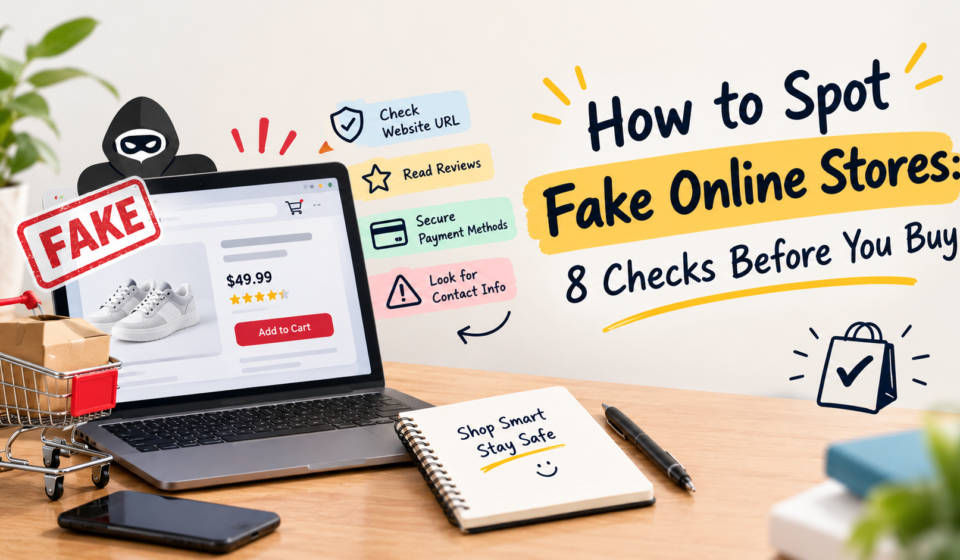

How to Spot Fake Online Stores: 8 Guides
Online stores can look polished and still be fake. A copied logo, a tempting discount, or a convincing social media ad can make a fraudulent seller seem legitimate. Before you share payment details, take a few minutes to check the store, the offer, and the way it wants you to pay.
Quick rule: If an unfamiliar store combines an unusually low price, pressure to buy immediately, and limited seller information, pause and verify it somewhere independent.
Why fake online stores can look convincing
Scammers may copy the names, product photos, and branding of real businesses, or create a new store that looks professional. They may advertise popular items at prices far below the usual cost and use urgency to stop shoppers from checking. The U.S. Federal Trade Commission (FTC) warns that social media ads can lead to scam sites selling counterfeit goods—or nothing at all. Australia’s Scamwatch also notes that fake stores can use copied websites, fake reviews, and social profiles.
A padlock icon or a web address beginning with “https” only indicates that the connection is encrypted. It does not prove that the seller is honest. Treat website design and security indicators as only part of your check.
8 checks to make before you buy
1. Read the web address carefully
Look for misspellings, extra words, unusual punctuation, or a domain that imitates a familiar brand. If you saw the offer in an ad or message, don’t assume the link is genuine. Search for the company independently and compare the address with its official website.
2. Find real contact and business details
Look for a physical business address, working contact details, and clear information about shipping, returns, refunds, and complaints. Check whether the details make sense for the country where the business claims to operate. Canada’s Office of Consumer Affairs recommends checking seller contact information and the terms of sale before buying online.
3. Be cautious of prices that seem too good to be true
Compare the item’s price with several established retailers. A dramatic discount on a high-demand product, paired with a countdown timer or “last chance” message, is a reason to slow down. Don’t let a limited-time offer rush you into sharing payment details.
4. Search for independent reviews
Search the store’s name and exact web address with words such as “review,” “complaint,” or “scam.” Check more than one source and look for specific, consistent experiences. Reviews displayed only on the seller’s own site may be incomplete or fabricated, so don’t rely on them alone.
5. Check what happens at checkout
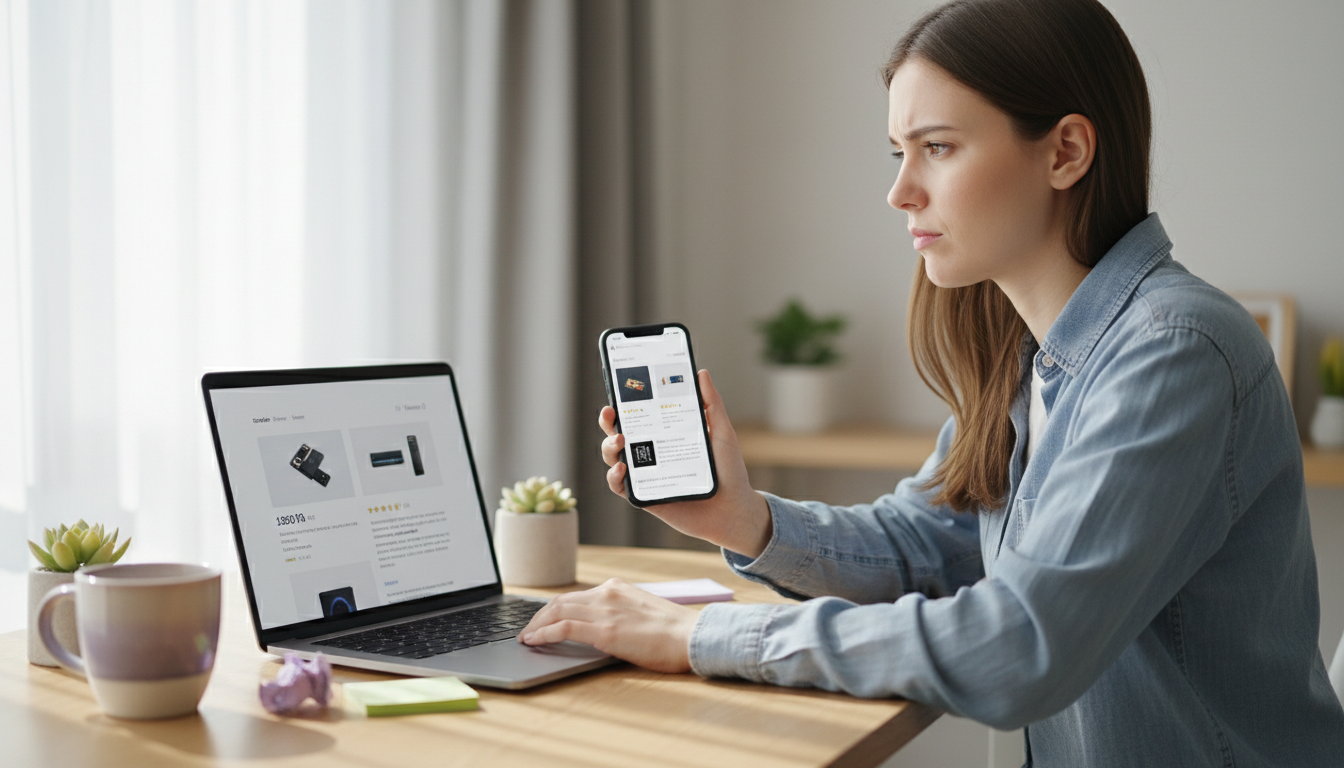
Prefer payment options that offer a dispute process or buyer protection where available, and review the terms for your country and provider. The FTC says a seller who insists on gift cards, wire transfer, a payment app, or cryptocurrency can be a warning sign. Use the payment method recommended by the marketplace if you are buying through one, and avoid moving the conversation or payment off-platform.
6. Read the delivery and return terms
Check shipping costs, expected delivery dates, return windows, refund rules, and who pays return postage. Vague or missing policies can make it difficult to resolve a problem later. Make sure the product description, sizes, materials, and seller location match what you intend to buy.
7. Don’t trust a social media profile by itself
A large follower count, attractive photos, or comments under an ad are not proof that a shop is genuine. Scammers can create new profiles, copy another business’s posts, or use fake engagement. Verify the store through an independent search and, where possible, navigate to the retailer’s known website yourself.
8. Keep your order records
Save the product page, receipt, order number, delivery estimate, and messages with the seller. These records can help if an order does not arrive, the item is different from the listing, or you need to contact your payment provider.
What to do if you already paid
Contact your bank, card issuer, or payment provider promptly and explain what happened. Ask what dispute or account-protection options are available. If you reused a password on the suspicious site, change it anywhere else you used it and turn on multi-factor authentication where available. Our guide to organizing your digital life has more practical account-security steps.
Keep copies of receipts, messages, ads, and the store’s web address. Report the incident to the relevant consumer-protection or fraud-reporting service in your country. Don’t pay an unexpected “recovery” company that promises to get your money back for an upfront fee; verify any offer independently.

Suggestions for safer online shopping
- Start with the retailer’s official site or a marketplace you already trust.
- Pause before buying from an unfamiliar seller, especially after seeing a social media ad.
- Compare the price, seller details, product information, and return policy.
- Use payment methods with a clear dispute process, where available.
- Save confirmations and check your account statement after the purchase.
International consumer resources
For country-specific advice, see the U.S. FTC’s online-shopping scam guidance, Canada’s Office of Consumer Affairs, and Australia’s Scamwatch buying and selling scam advice. Reporting channels, consumer rights, and payment protections vary by location, so use the official guidance for where you live.
Frequently asked questions
Does “https” mean an online store is safe?
No. It indicates an encrypted connection, but it does not verify the store’s identity or trustworthiness. Check the seller, web address, independent reviews, and terms as well.
Can I trust reviews on the store’s website?
Use them as only one clue. Search the seller and web address independently, compare multiple sources, and look for detailed reviews that describe real experiences.
What payment method is safest?
Options and protections differ by country and provider. Review the dispute rules before paying, and be cautious if an unfamiliar seller insists on gift cards, cryptocurrency, wire transfer, or payment outside a marketplace’s normal checkout.
What should I do if an order never arrives?
Save your order records, contact the seller through its official support channel, and contact your bank or payment provider promptly to ask about dispute options. Follow your local consumer-protection agency’s reporting guidance.
Conclusion
A convincing website or a tempting deal is not enough to prove that a seller is legitimate. Check the address and business details, compare prices, look for independent reviews, and understand your payment and return options. A short pause before checkout can help you make a more informed choice.