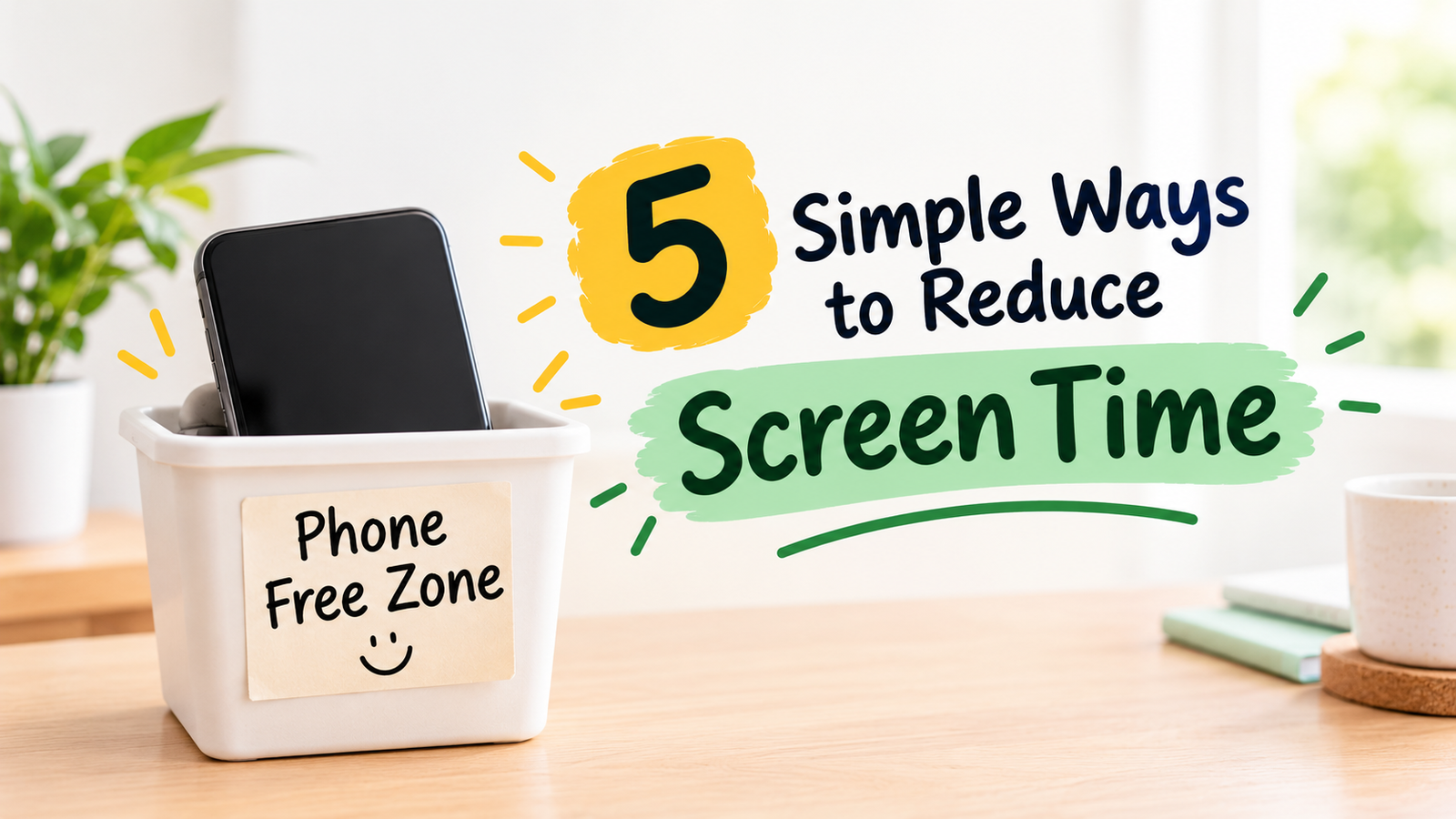

Smartphones have become an important part of our daily lives. We use them for communication, entertainment, work, shopping, and learning. But sometimes, a quick check of our phone turns into hours of scrolling without even realizing it.
Excessive screen time can interfere with our daily routines, sleep, focus, and time with family or friends. The solution is not to stop using technology completely. Instead, it is about learning how to use it more intentionally.
Here are five simple ways to reduce screen time and create a healthier digital routine.
1. Set Daily Screen Time Limits
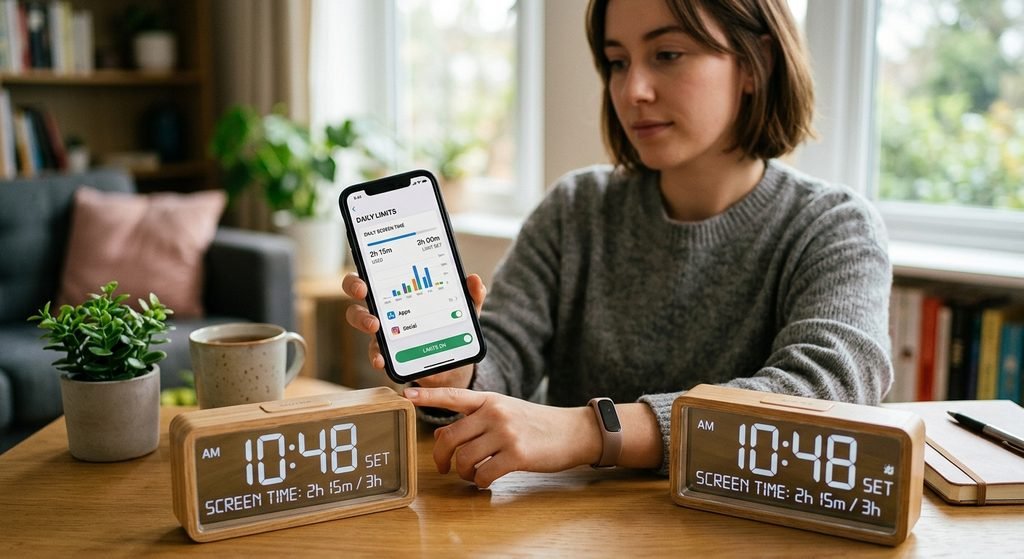
One of the easiest ways to control phone usage is to set daily limits for apps that consume most of your time.
Social media, video platforms, and mobile games can easily take up more time than planned.
Start by checking your phone’s Screen Time or Digital Wellbeing settings. Set realistic limits for your most-used apps and gradually reduce them.
Tip: Begin with just 15–30 minutes less screen time per day rather than making a sudden, difficult change.
According to International News : https://www.aap.org/en/patient-care/media-and-children/center-of-excellence-on-social-media-and-youth-mental-health/qa-portal/qa-portal-library/qa-portal-library-questions/screen-time-guidelines/
2. Keep Your Phone Away During Important Activities
Do you check your phone while eating, working, studying, or spending time with family?
Constant phone checking can interrupt your attention and make simple activities take longer.
Try keeping your phone in another room or placing it face down during important tasks. You can also create phone-free periods during meals or conversations.
Giving your attention to one activity at a time can help you become more present in your daily life.
According to International News : https://www.cdc.gov/healthy-schools/digital-behaviors/index.html

3. Replace Scrolling With Offline Activities

Instead of opening social media whenever you feel bored, try activities such as:
- Reading a book
- Going for a short walk
- Exercising or stretching
- Learning a new skill
- Spending time with friends or family
- Writing your daily goals
You do not need to fill every free moment with activity. Even a little time away from screens can help you build a more balanced routine.
According to International News : https://www.aap.org/en/patient-care/media-and-children/center-of-excellence-on-social-media-and-youth-mental-health/understanding-the-new-AAP-digital-media-guidelines/
4. Turn Off Unnecessary Notifications
Every notification creates another reason to pick up your phone.
Messages, promotional alerts, app updates, and social media notifications can interrupt your focus throughout the day.
Review your notification settings and turn off alerts that are not important. Keep essential calls and messages enabled while limiting unnecessary distractions.
Simple idea: Check social media at planned times instead of responding to every notification immediately.
According to international News : https://www.aap.org/en/patient-care/media-and-children/center-of-excellence-on-social-media-and-youth-mental-health/understanding-the-new-AAP-digital-media-guidelines/

5. Create a Phone-Free Bedtime Routine
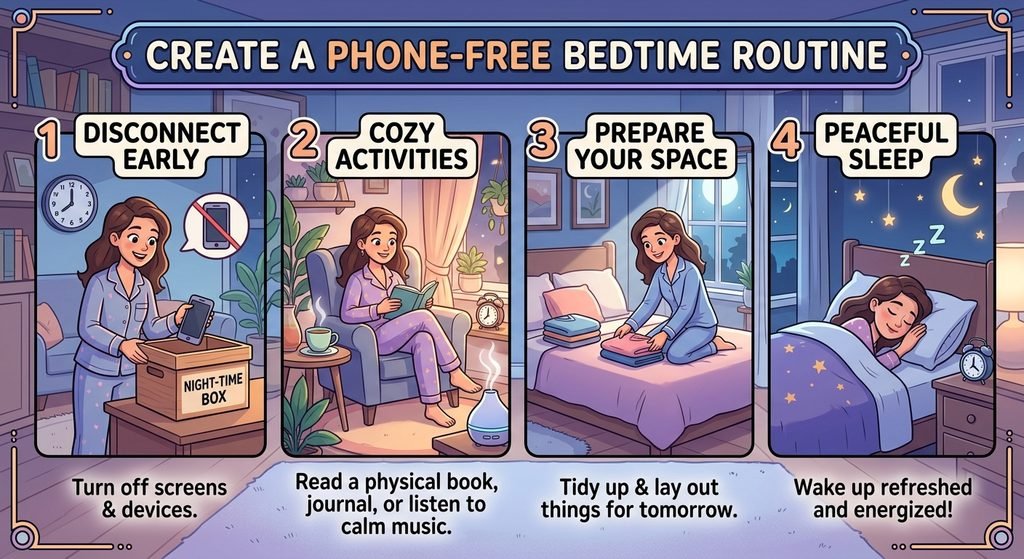
Many people use their phones right before sleeping, often spending more time scrolling than they intended.
Try creating a simple bedtime routine that does not involve screens.
- Stop using your phone around 30–60 minutes before bedtime if practical.
- Keep your phone away from your pillow.
- Read a book or listen to relaxing audio.
- Use an alarm clock if you need to keep your phone away.
A consistent, relaxing bedtime routine can support better sleep habits.
According to International News : https://www.who.int/publications/i/item/9789241550536
How to Make These Changes Last
You do not have to follow all five methods perfectly from the first day. Start with one small change and build from there.For example, you could begin by turning off unnecessary notifications or avoiding your phone during meals. Once that becomes easier, introduce another habit.The goal is not to use your phone as little as possible. It is to make sure your phone supports your life rather than controlling your time.
FAQs
1. How can I reduce screen time every day?
Set app limits, turn off unnecessary notifications, and schedule phone-free periods during your daily routine.
2. What is the easiest way to stop scrolling too much?
Remove unnecessary notifications, avoid keeping social media apps on your home screen, and decide specific times for checking them.
3. Does reducing screen time improve productivity?
Reducing unnecessary phone interruptions may help you maintain focus and spend more time on important tasks.
4. How can I reduce phone usage before bed?
Create a phone-free bedtime routine, keep your device away from your bed, and replace scrolling with reading or relaxing activities.
5. Can I reduce screen time without deleting social media?
Yes. You can set app limits, mute unnecessary alerts, and use social media during planned periods rather than throughout the day.