Have you ever looked at the calendar and wondered, “How is it already the end of the year?”
As children, summer holidays seemed to last forever. School years felt long, birthdays were exciting milestones, and every new experience gave us something to remember. Yet as adults, months can pass so quickly that we barely notice them.
The clock has not changed. A day still contains 24 hours. What may change is how our brain experiences time and how we remember the days that have passed.
Scientists have explored several possible explanations for this familiar feeling. Although there is no single answer that explains everyone’s experience, psychology and memory research offer some interesting clues.
1. Your Brain Gets Used to Repeated Experiences
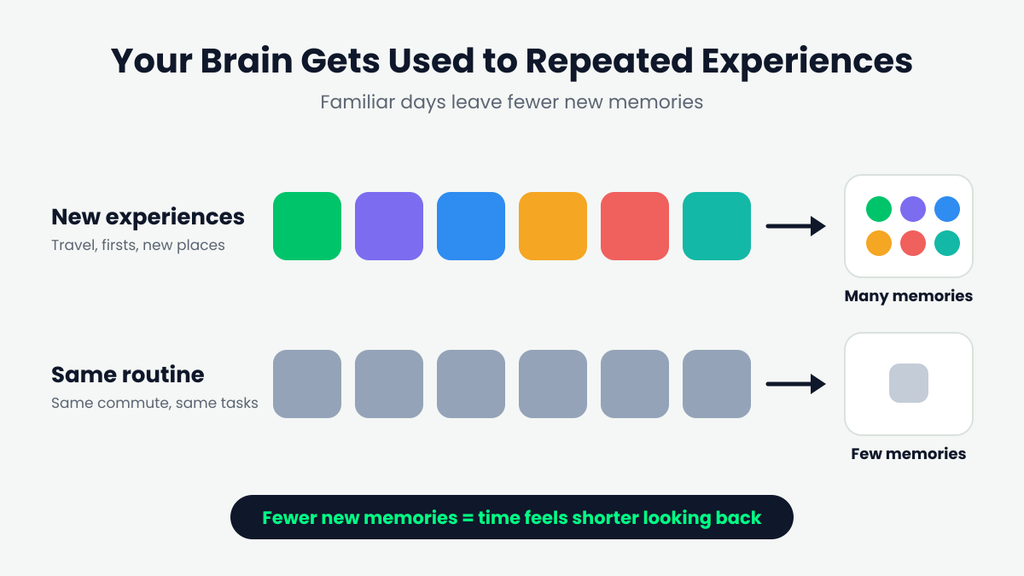
Think about your usual weekday. You wake up, check your phone, get ready, go to work, eat, complete your responsibilities, and return home.
When these activities happen repeatedly, they become familiar. Your brain does not need to treat every ordinary event as something completely new.
Now compare that routine with your first day at a new job or a visit to a place you have never seen before. You may notice more details because the experience is unfamiliar.
One explanation is that familiar periods can become less distinctive in our memories. When we look back, several ordinary days may blend into one general memory of “the usual routine.”
A 2024 research paper published in Personality and Social Psychology Bulletin explored why people feel that life moves quickly. Its findings suggest that routine may play a role, although the researchers did not find consistent support for every proposed explanation.
Try this: Change one small part of your routine each week. Explore a new place, learn a recipe, or try an activity you have never done before.
2. New Memories Can Change How You Remember Time
Imagine two weekends.
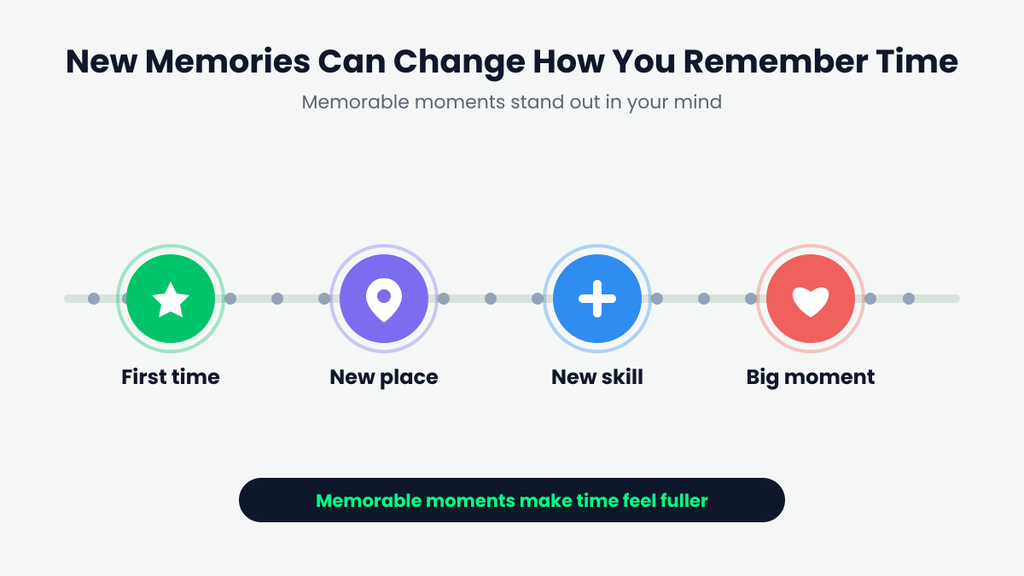
During the first weekend, you follow your usual routine. During the second, you visit a new place, try unfamiliar food, meet someone new, and take part in an interesting activity.
Both weekends last the same amount of time. However, when you look back, the second weekend may feel fuller because it contains more distinctive experiences.
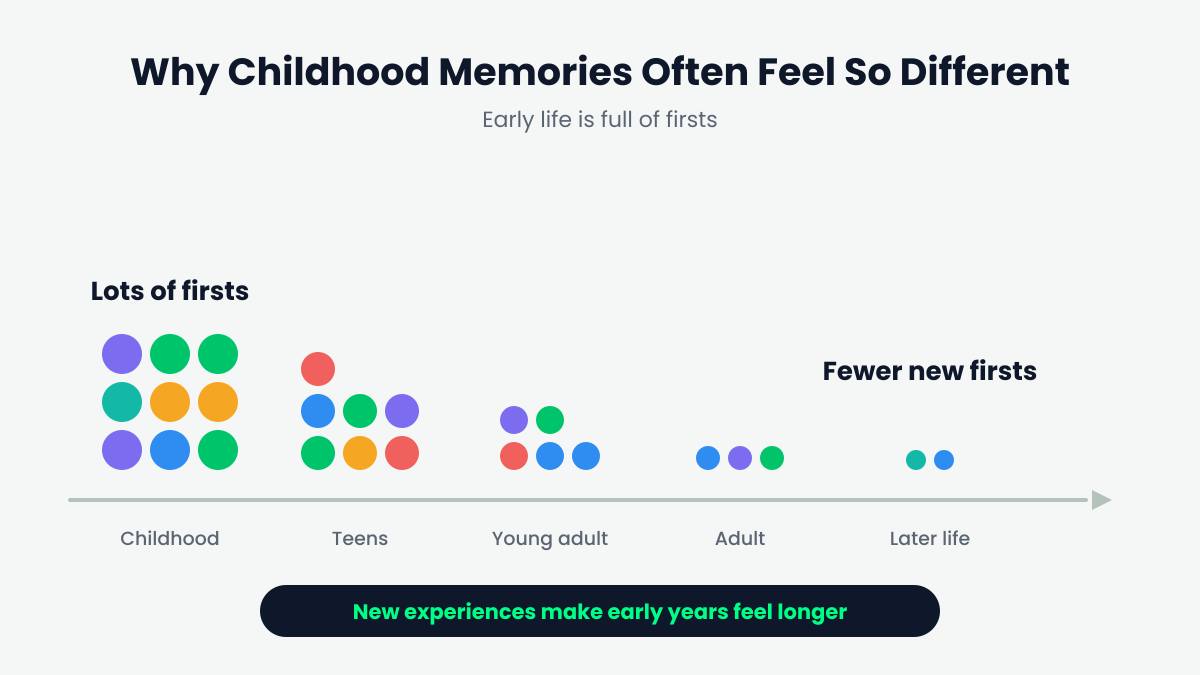
This is one possible reason childhood can seem so long in retrospect. Early life is often filled with first experiences: learning to ride a bicycle, starting school, making friends, and discovering new interests.
However, this explanation is not the whole story. A 2026 study published in Memory & Cognition found that faster perceived passage of the past decade among older adults was associated with differences in the ability to form new memories, rather than simply the number or importance of autobiographical memories.
This research is still part of a developing field, so it is better to think of memory as one possible factor rather than a complete explanation.
Try this: At the end of each day, write down one thing that was new, interesting, or meaningful. Over time, these short notes can help you look back on your experiences.
3. One Year Represents a Different Part of Your Life
Here is another interesting idea.
When you are 10 years old, one year represents 10% of your life. When you are 50, the same year represents only 2% of the years you have lived.
Some people suggest that this difference may contribute to the feeling that a year becomes shorter as we age.
It is an easy way to understand why the idea sounds convincing, but it should not be treated as a proven scientific formula. Researchers have not established that our brains calculate time in this exact way.
The important point is that our perception of time is subjective. The same period can feel different depending on our age, attention, experiences, and the way we reflect on the past.

4. Being Busy Can Make Days Blur Together
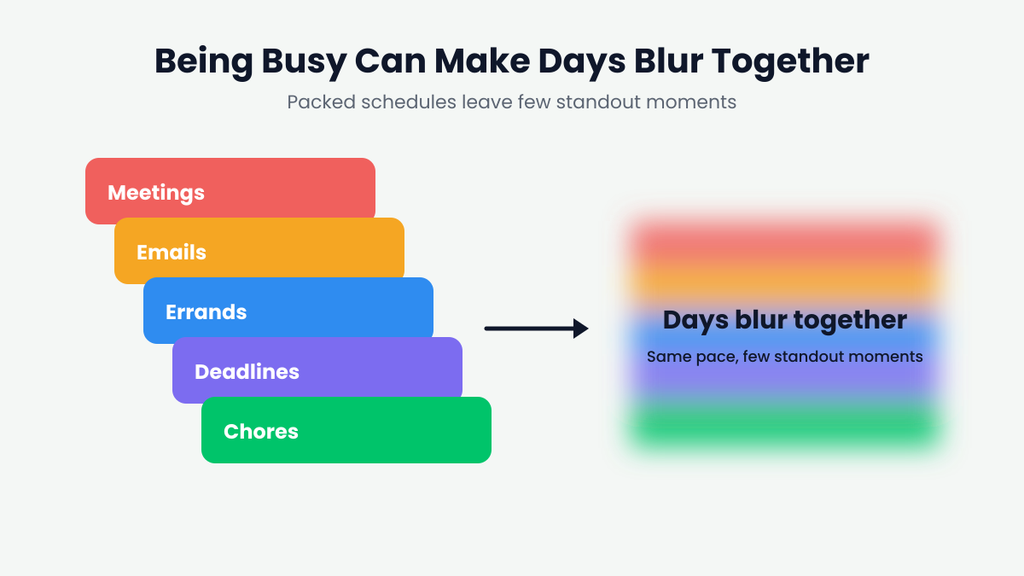
Modern life gives us plenty to think about. Work deadlines, household responsibilities, messages, social media, and financial concerns can fill our attention from morning until night.
When you focus on completing one task after another, you may have little time to notice the details of your day.
Then evening arrives, and it feels as if the day disappeared.
Attention also affects how we experience time in the moment. Waiting without anything to do may feel slow, while an engaging activity can make an hour seem to pass quickly.
This is why the experience of time during an event can differ from how long that event feels when you remember it later.
Try this: Take a short break without checking your phone. Enjoy your tea, look outside, or go for a walk while paying attention to your surroundings.
5. Why Childhood Memories Often Feel So Different
Think about your childhood home, school, favourite game, or a family trip. Even small details may bring back strong feelings.
Early life often includes major changes and milestones. We learn new skills, form relationships, and discover how the world works. These events can create memories that remain important for years.
Adult life also contains meaningful experiences, but familiar responsibilities may occupy more of our time.
This does not mean adulthood must feel repetitive. Starting a hobby, travelling somewhere new, building a friendship, or learning a skill can bring fresh experiences into any stage of life.
The goal is not to recreate childhood. It is to keep making room for experiences that matter to you now.
6. Can You Make Life Feel Less Rushed?

You cannot slow the clock, but you can make your days more noticeable, varied, and meaningful.
Here are six practical ideas you can start using today.
Learn One Small Thing Every Day
Read about a topic you do not understand, learn a few words in another language, or practise a new skill. Learning gives your day a clear activity beyond your usual responsibilities.
Explore Something Unfamiliar
You do not need an expensive holiday. Visit a nearby place you have never explored, try a different walking route, or prepare a new meal at home.
Create Memories With Other People
Spend time with friends or family without rushing through the conversation. Shared experiences can become important memories later.
Reduce Automatic Phone Scrolling
Notice how often you open an app without thinking. Set aside some screen-free time for reading, exercise, hobbies, or conversation.
Keep a Simple Daily Journal
Write three short notes each evening:
- One thing I did today.
- One thing I learned or noticed.
- One moment I appreciated.
This takes only a few minutes and can help you reflect on days that might otherwise blend together.
Make Time for What Matters
Busy days are not necessarily meaningful days. Choose a few activities that reflect your interests, relationships, and goals rather than filling every free moment with another task.
These suggestions cannot guarantee that time will feel slower, but they can help you pay attention to your experiences and remember what makes your life meaningful.
7. What Does Scientific Research Actually Say?
The feeling that time moves faster with age is widely reported, especially when people reflect on longer periods such as the past decade. However, research has not established one universal explanation.
For example, a 2010 study examining time perception found that age differences in reported speed were small for many time periods, with clearer differences when people considered the previous 10 years.
More recent research has investigated how memory formation and routine may be related to this experience. The results are helping researchers understand the question, but further work is needed.
If you want to explore the topic beyond this article, these international resources are useful starting points:
- Scientific American — Why Does Time Seem to Speed Up with Age? — An accessible explanation of time perception, memory, and new experiences.
- PubMed — Aging and the Speed of Time — A research paper examining different explanations for why time seems to pass quickly.
- PubMed — Memory and the Perceived Passage of Time — A 2026 research paper exploring the relationship between age, memory formation, and perceived time.
- American Psychological Association — Time Perspective and Age-Related Processes — Research-related information about how people think about time and the future as they age.
These links provide further reading and are not substitutes for the complete research literature.

Conclusion: Make Your Days Count
Why does time feel faster as you get older? The answer may involve familiar routines, attention, memory, and the way we reflect on longer periods of life. No single theory explains the experience for everyone.
Instead of worrying about how quickly the years pass, focus on making your days more meaningful. Learn something new, spend time with people you care about, explore your surroundings, and notice the small moments you might otherwise miss.
You do not need an extraordinary life to create lasting memories. Sometimes, a new experience or a meaningful conversation is enough to make an ordinary day stand out.
Time keeps moving, but you can choose to be more present while it does.
Frequently Asked Questions
1. Does time really move faster as we get older?
No. Clock time remains constant, but our subjective experience of time can change. Many people report that longer periods, such as the past decade, seem to have passed quickly.
2. Why does childhood seem to last longer?
Childhood often includes many first experiences and major changes. These can make memories from that period feel distinctive when we look back.
3. Can learning new things change how time feels?
New experiences may create more distinctive memories and make a period feel fuller in retrospect. However, research does not guarantee that learning something new will make time feel slower.
4. Why do busy days pass so quickly?
When your attention is occupied by tasks, you may notice time passing less. Looking back, several similar days can also feel as though they blended together.
5. What is one simple way to make everyday life more memorable?
Write down one interesting or meaningful moment each day. You can also try new activities, spend time with others, and reduce distractions during important moments.
Disclaimer: This article is for general educational purposes. The scientific explanations discussed are possible contributing factors, not definitive conclusions.