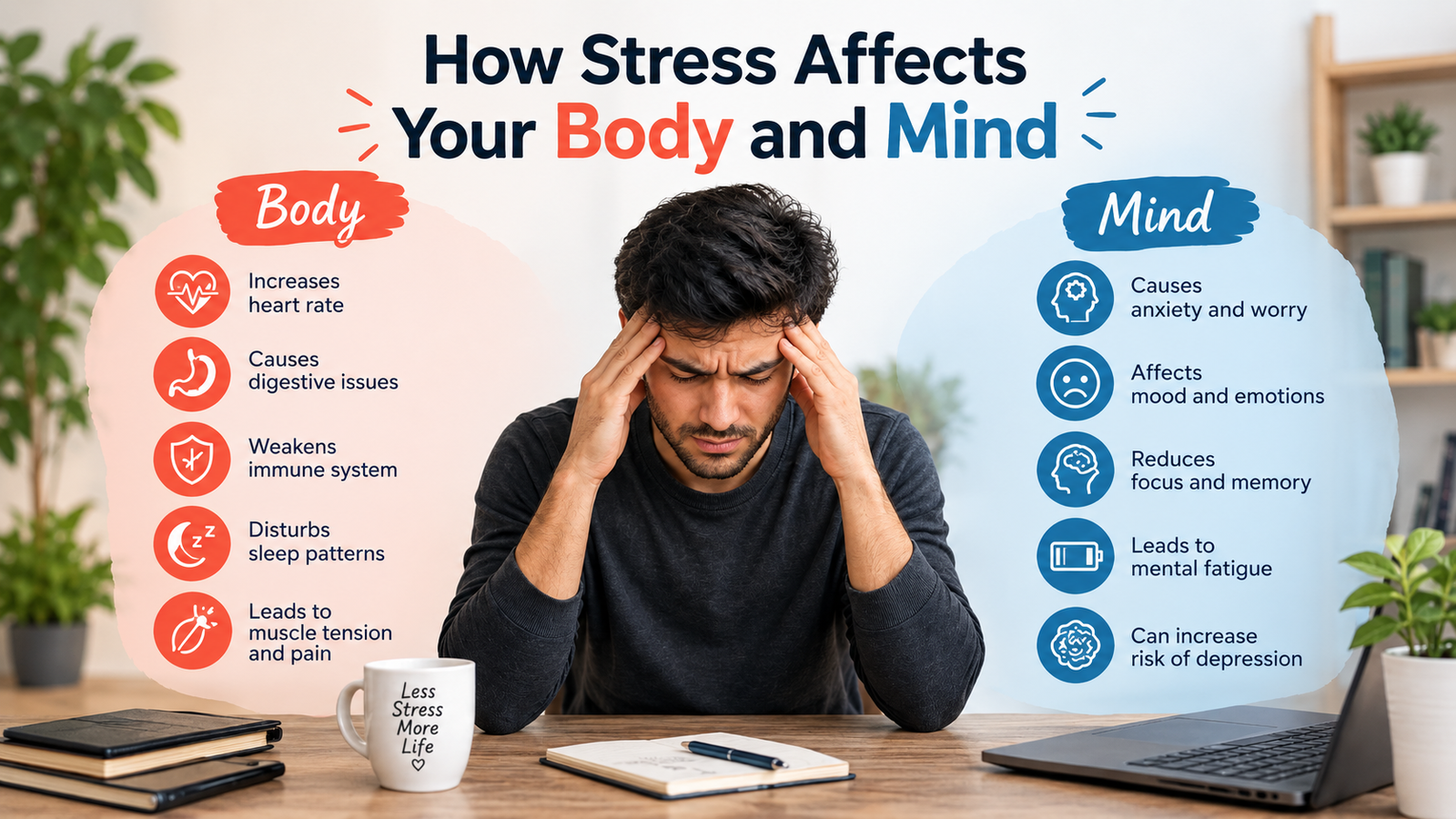

Stress is a normal part of life. Everyone experiences stress from time to time because of work, money, relationships, studies, or everyday responsibilities. A small amount of stress can sometimes help you stay focused and deal with challenges.
However, long-term or excessive stress can affect both your body and mind. It may influence your sleep, mood, energy levels, concentration, and overall health.


1. Stress Can Affect Your Brain and Mood
When you are stressed, your body enters a state of alertness. This can make you feel worried, nervous, frustrated, or overwhelmed.
Long-lasting stress may also make it harder to concentrate or make decisions. You may find yourself thinking about the same problem repeatedly or feeling mentally exhausted.
Taking regular breaks and finding healthy ways to manage stress can help you feel more balanced.
2. Stress Can Affect Your Sleep
Stress and sleep are closely connected. When your mind is busy with worries, it can become difficult to relax before bedtime.
Stress may contribute to difficulty falling asleep or staying asleep. Poor sleep can then leave you feeling tired and less able to handle daily stress.
Creating a relaxing bedtime routine, reducing screen time before bed, and keeping a regular sleep schedule may help support better sleep.
3. Stress Can Affect Your Energy
Constant stress can leave you feeling mentally and physically drained.
You may feel tired even after completing simple tasks. When stress is combined with poor sleep, an unhealthy diet, or a lack of physical activity, low energy can become more noticeable.
Simple habits such as regular movement, balanced meals, enough sleep, and relaxation can support your overall energy and well-being.
4. Stress Can Affect Your Heart and Body
Stress activates the body’s “fight-or-flight” response. This can temporarily increase heart rate, breathing, and blood pressure.
Short periods of stress are a normal response. However, frequent or long-term stress can put continued strain on the body.
This is one reason why learning healthy ways to manage stress is important for overall health.
5. Stress Can Affect Your Digestion
Some people notice digestive changes when they are stressed.
Stress can affect the way your body functions and may be associated with symptoms such as stomach discomfort, changes in appetite, or other digestive problems.
If digestive symptoms are persistent or severe, it is important to speak with a healthcare professional rather than assuming stress is the only cause.
6. Stress Can Affect Your Immune System
Your body responds to stress in many ways. Short-term stress can temporarily change how the immune system functions.
However, prolonged stress may affect the body’s normal processes and overall well-being.
This is another reason to make relaxation, sleep, physical activity, and healthy daily habits part of your routine.
7. Stress Can Change Your Daily Habits
When people are stressed, they may change their normal routines. Some may eat more or less than usual, avoid physical activity, sleep poorly, or spend more time on their phones.
These habits can sometimes create a cycle where stress affects daily behavior, and unhealthy habits make it harder to manage stress.
Recognizing these changes is an important first step toward building healthier routines.
Simple Ways to Manage Everyday Stress
You do not always need complicated solutions to manage everyday stress. Small changes can make a difference.
- Take short breaks during busy days.
- Go for a walk or do regular physical activity.
- Maintain a consistent sleep schedule.
- Eat balanced and nutritious meals.
- Spend time with supportive family or friends.
- Practice slow breathing or relaxation techniques.
- Limit unnecessary screen time.
- Organize tasks and avoid trying to do everything at once.
- Make time for activities you enjoy.
When Should You Get Professional Help?
Occasional stress is normal, but you should not ignore stress that becomes overwhelming or starts interfering with your everyday life.
If stress is affecting your sleep, work, relationships, mood, or ability to function normally, consider speaking with a qualified healthcare professional. If you feel unable to cope or are experiencing a mental health emergency, seek professional help promptly.
International Reports and Research
Stress and its effects on physical and mental health have been studied by major international health organizations and researchers.
World Health Organization (WHO) explains that stress affects both the mind and body. It can contribute to problems such as difficulty concentrating, headaches, stomach problems, sleep difficulties, anxiety and irritability. WHO also notes that learning healthy ways to cope with stress can support overall well-being.
American Psychological Association (APA) reports that prolonged or chronic stress can affect multiple body systems, including the cardiovascular, digestive, nervous and musculoskeletal systems. Long-term stress may also affect sleep, mood, memory and concentration.
A 2025 global research study published in the Journal of Affective Disorders analyzed data from more than 300,000 people across 131 countries to examine the prevalence and factors associated with stress worldwide.
Read the Full Reports and Research
Global Evidence on the Prevalence of and Risk Factors Associated with Stress (2025):
https://pubmed.ncbi.nlm.nih.gov/39805499/
World Health Organization (WHO) – Stress:
https://www.who.int/news-room/questions-and-answers/item/stress
WHO – World Mental Health Today: Latest Data (2025):
https://www.who.int/publications/i/item/9789240113817
American Psychological Association – How Stress Affects Your Health:
https://www.apa.org/topics/stress-health
Frequently Asked Questions (FAQs)
1. How does stress affect your body and mind?
Stress can affect both mental and physical well-being. It may influence your mood, concentration, sleep, energy levels, heart rate, digestion, and daily habits.
2. Can stress make you feel physically tired?
Yes. Ongoing stress can contribute to mental and physical exhaustion, especially when it is combined with poor sleep or unhealthy daily habits.
3. Can stress affect sleep?
Yes. Stress can make it difficult to relax and may contribute to problems falling asleep or staying asleep. Poor sleep can also make stress harder to manage.
4. Can stress affect digestion?
Stress can affect the digestive system and may be associated with changes in appetite or stomach discomfort. Persistent or severe digestive symptoms should be discussed with a healthcare professional.
5. What are some simple ways to manage stress?
Regular physical activity, sufficient sleep, balanced meals, relaxation techniques, social support, taking breaks, and organizing daily tasks can help manage everyday stress.
6. When should I seek professional help for stress?
Consider speaking with a healthcare professional if stress becomes overwhelming or regularly interferes with your sleep, work, relationships, mood, or daily activities.