
7 Signs Your Body May Need More Essential Nutrients
Have you ever felt tired, noticed changes in your skin, or struggled to concentrate even when your daily routine seems normal? Sometimes, these changes can be related to your diet and the nutrients your body receives.
Your body needs vitamins and minerals to support energy production, healthy blood cells, bones, muscles, and many other important functions. If your diet lacks variety, you may not get enough of certain nutrients.
However, these signs do not always mean you have a nutritional deficiency. Other health conditions can cause similar symptoms, so it is important to understand the possible reasons.
In this article, we will explore seven signs that may indicate you need to pay more attention to your nutrition.
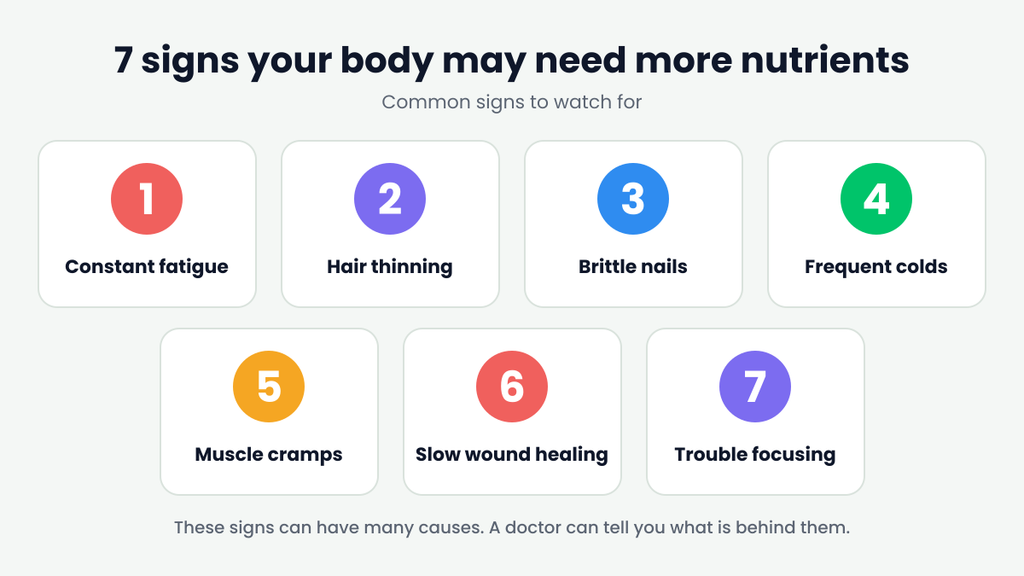
1. Feeling Tired or Weak More Often
Feeling tired after a busy day is normal. However, ongoing tiredness or weakness may sometimes be related to a lack of certain nutrients, particularly iron or vitamin B12.
Iron helps your body produce hemoglobin, which carries oxygen in your blood. Vitamin B12 supports healthy red blood cells and the nervous system.
Foods to consider:
- Beans and lentils
- Eggs and dairy products
- Fish and lean meat
- Fortified breakfast cereals
If tiredness continues despite getting enough rest, speak with a healthcare professional to identify the cause rather than assuming you need supplements.
Read more: NHS Guide to Iron
2. Pale Skin or Looking Less Healthy Than Usual
A noticeable change in skin color, particularly unusual paleness, can sometimes be associated with iron deficiency anemia or other health problems.
Iron, vitamin B12, and folate all play roles in healthy blood cell production. When these nutrients are lacking, some people may develop symptoms such as pale skin, weakness, or shortness of breath.
What can help?
Eat a varied diet that includes iron-rich foods, leafy green vegetables, beans, eggs, and other sources of essential nutrients.
Do not rely on appearance alone to identify a deficiency. If you notice persistent paleness or unusual weakness, arrange a medical assessment.
3. Mouth Ulcers or a Sore Tongue
Occasional mouth ulcers can happen for many reasons, including irritation, stress, or minor injury. However, frequent mouth ulcers, a sore tongue, or a red and swollen tongue may sometimes be associated with low levels of vitamin B12, folate, or iron.
These nutrients support normal blood cell production and other important body functions.
Helpful habits:
- Eat a variety of fruits and vegetables.
- Include suitable sources of protein.
- Avoid foods that repeatedly irritate your mouth.
- Seek medical advice if mouth problems keep returning.
Persistent symptoms should be checked because nutritional deficiencies are only one possible explanation.
4. Tingling or Numbness in Your Hands and Feet
Pins and needles can happen when pressure is placed on a nerve, such as when you sit in one position for too long. But repeated or unexplained tingling and numbness deserve attention.
Vitamin B12 is important for maintaining a healthy nervous system. A deficiency can sometimes cause numbness, tingling, balance problems, or muscle weakness.
What should you do?
If tingling happens frequently or does not go away, consult a healthcare professional. A medical assessment and appropriate blood tests can help identify whether a deficiency or another condition is responsible.
Do not try to treat unexplained nerve symptoms with high-dose supplements on your own.
5. Changes in Hair, Skin, or Nails
Hair thinning, dry skin, or brittle nails can have several causes. In some cases, inadequate nutrition may contribute to these changes.
Iron, zinc, protein, and other nutrients help support normal growth and body functions. However, hair and nail changes alone cannot tell you which nutrient, if any, is missing.
Support your nutrition with:
- Eggs, fish, beans, or other protein sources
- A variety of fruits and vegetables
- Nuts and seeds
- Whole grains and balanced meals
If you experience sudden hair loss or persistent changes in your skin or nails, seek professional advice instead of buying supplements based only on online recommendations.
6. Bone or Muscle Problems
Your bones and muscles need several nutrients to function properly. Vitamin D helps your body absorb calcium, while calcium is essential for maintaining strong bones.
A lack of vitamin D can contribute to bone pain and muscle weakness in some people. However, muscle discomfort and bone problems can also result from other medical conditions.
Ways to support bone health:
- Include calcium-rich foods such as dairy products or suitable fortified alternatives.
- Eat a balanced diet with a variety of nutrients.
- Stay physically active according to your abilities.
- Ask a healthcare professional whether vitamin D testing or supplementation is appropriate for you.
Avoid taking large doses of vitamin D or calcium without professional guidance.
7. Getting Sick Frequently or Taking Longer to Recover
Your immune system needs adequate nutrition to function properly. A varied diet provides vitamins, minerals, protein, and other nutrients that support normal immune function.
Poor nutrition can affect your health, but getting a cold frequently does not automatically mean you have a vitamin deficiency.
To support your overall health, aim to eat a variety of vegetables, fruits, whole grains, protein-rich foods, and other nutritious foods that suit your needs.
If you experience repeated infections, unusually slow recovery, or other persistent symptoms, discuss them with a healthcare professional.
How Can You Get More Essential Nutrients From Your Diet?
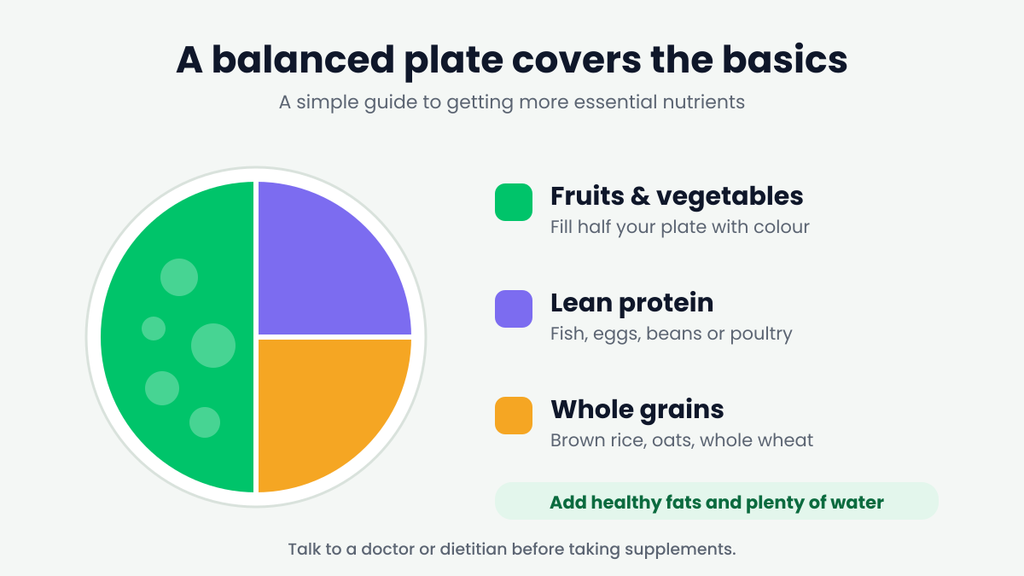
For most people, a balanced and varied diet is a good starting point. You do not need to buy expensive supplements or completely change your eating habits overnight.
Try these practical steps:
1. Eat different types of foods. Include vegetables, fruits, whole grains, and suitable protein sources throughout the week.
2. Include iron-rich foods. Beans, lentils, meat, and fortified cereals can help you get iron.
3. Choose sources of vitamin B12. Fish, meat, eggs, dairy products, and certain fortified foods provide vitamin B12.
4. Pay attention to calcium and vitamin D. Include suitable food sources and ask a healthcare professional whether you need a supplement.
5. Avoid unnecessary supplements. Taking too much of certain vitamins or minerals can be harmful. Supplements should be selected according to your needs and professional advice.
For more detailed guidance, read the NHS Guide to Vitamins and Minerals.
When Should You See a Doctor?
Do not ignore symptoms that continue, get worse, or interfere with your daily life. A healthcare professional can review your symptoms, diet, medications, and medical history to decide whether tests are needed.
Depending on your situation, blood tests may help identify iron deficiency, vitamin B12 deficiency, or other problems.
Seek urgent medical care if you develop severe shortness of breath, chest pain, fainting, or sudden weakness or numbness.
Remember, symptoms alone cannot confirm a nutritional deficiency. The right treatment depends on finding the actual cause.
Frequently Asked Questions
1. What are the common signs of a nutrient deficiency?
Possible signs include persistent tiredness, weakness, pale skin, mouth or tongue problems, tingling, and certain bone or muscle symptoms. These signs can have many causes and do not confirm a deficiency by themselves.
2. Can I get all essential nutrients from food?
Many people can get the nutrients they need from a varied, balanced diet. Some people may need supplements because of their dietary pattern, health conditions, life stage, or difficulty absorbing nutrients.
3. Should I take multivitamins if I feel tired?
Not necessarily. Tiredness has many possible causes. It is better to discuss persistent fatigue with a healthcare professional before starting supplements, particularly high-dose products.
4. Which foods contain several important nutrients?
Eggs, beans, lentils, fish, dairy products, nuts, seeds, vegetables, fruits, and whole grains can provide a range of nutrients. Eating different foods helps improve dietary variety.
5. How can a nutritional deficiency be confirmed?
A healthcare professional can assess your symptoms and health history and recommend appropriate tests when necessary. The right test depends on the suspected deficiency.
Conclusion
Essential nutrients help your body function properly, but symptoms such as tiredness, hair changes, or tingling can have many different causes.
The best first step is to build healthy eating habits, choose a variety of nutritious foods, and pay attention to changes in your health. If symptoms persist, seek professional advice rather than guessing which nutrient you need.
A balanced diet and the right medical guidance can help you make better decisions about your long-term health.